Blogs
2026.04.15
Introduction to the characteristics of PPS and key considerations in injection molding.
PPS is a type of super engineering plastic with a wide range of unique properties.
In this article, we will introduce the key characteristics of PPS, along with important considerations in injection molding. Please read on to learn more.
What is PPS?
PPS (Polyphenylene Sulfide) is a type of super engineering plastic known for its excellent heat resistance and chemical resistance.
It has a high melting point of approximately 280°C and can maintain its performance even under prolonged exposure to high-temperature environments. As a result, it is widely used in automotive engine compartment components and electrical parts.
In addition, PPS has extremely low water absorption and is minimally affected by humidity. Therefore, dimensional changes due to temperature and humidity variations are small, allowing it to maintain excellent dimensional stability. Furthermore, PPS offers high flame retardancy and self-extinguishing properties, making it suitable for use in electrical and electronic components.
On the other hand, PPS is a crystalline resin, and its degree of crystallinity can vary depending on molding conditions and mold design, which may affect mechanical properties and dimensional accuracy. Therefore, in injection molding, it is essential to set appropriate processing conditions based on the material characteristics.
Key considerations in PPS injection molding
Although PPS offers excellent performance, it also has specific considerations in injection molding. By understanding the material properties and properly setting molding conditions and mold design, it is possible to manufacture products with stable and consistent quality.
Mold temperature control
In PPS injection molding, mold temperature control is extremely important.
The mold temperature for PPS is typically set in the range of 120–160°C. Proper temperature control stabilizes crystallization, thereby improving mechanical properties and dimensional stability.
If the mold temperature is too low, crystallization of the resin becomes insufficient, which may lead to reduced strength and heat resistance. It may also cause surface defects and increased internal stress.
Conversely, if the mold temperature is too high, it can result in longer molding cycles and potential mold-related issues. Therefore, it is essential to optimize the mold temperature according to the product geometry and wall thickness.
Strength Variation Due to Fiber Orientation
PPS is a material that is widely used in glass fiber reinforced grades, in which fiber orientation occurs during molding due to resin flow. Since strength and stiffness vary depending on the fiber orientation direction, strength variation may occur depending on the part geometry.
In particular, strength tends to decrease in the direction perpendicular to the flow direction. Therefore, it is important to consider gate location and resin flow in the design stage. By optimizing gate placement and flow balance so that fiber orientation aligns with areas requiring strength, product reliability can be significantly improved.
Occurrence of flash and weld lines
PPS is a material with relatively good flowability; however, when filled with glass fibers or other fillers, its resin flow behavior becomes more complex. As a result, flash and weld lines may occur depending on the molding conditions.
A weld line is a linear mark formed where two resin flow fronts meet. It can cause not only cosmetic defects but also a reduction in mechanical strength. In small components, wall thickness is often thin, making it important to design appropriate gates to ensure smooth resin flow and to set suitable injection speeds.
In addition, if the mold parting surface accuracy is insufficient, flash is more likely to occur. Therefore, mold machining precision and maintenance are also critical factors in ensuring product quality.
Molding shrinkage and dimensional accuracy
PPS is a material with excellent dimensional stability; however, as a crystalline resin, it exhibits relatively high molding shrinkage. In particular, glass fiber reinforced grades show varying shrinkage rates depending on fiber orientation, which may lead to warpage or deformation depending on the part geometry.
To prevent such issues, it is important to apply dimensional compensation considering shrinkage during the mold design stage. In addition, proper gate location and balanced wall thickness design help suppress deformation caused by shrinkage.
Furthermore, appropriate cooling and holding pressure conditions can stabilize molding shrinkage, enabling the production of high-precision parts.
Although PPS is widely used as a high-performance material in various fields, fully utilizing its performance requires a thorough understanding of its material characteristics and proper injection molding conditions. Careful consideration of these properties from the design stage contributes to stable and high-quality part production.
Our PPS Injection Molding Case Studies
Housing case for residential equipment
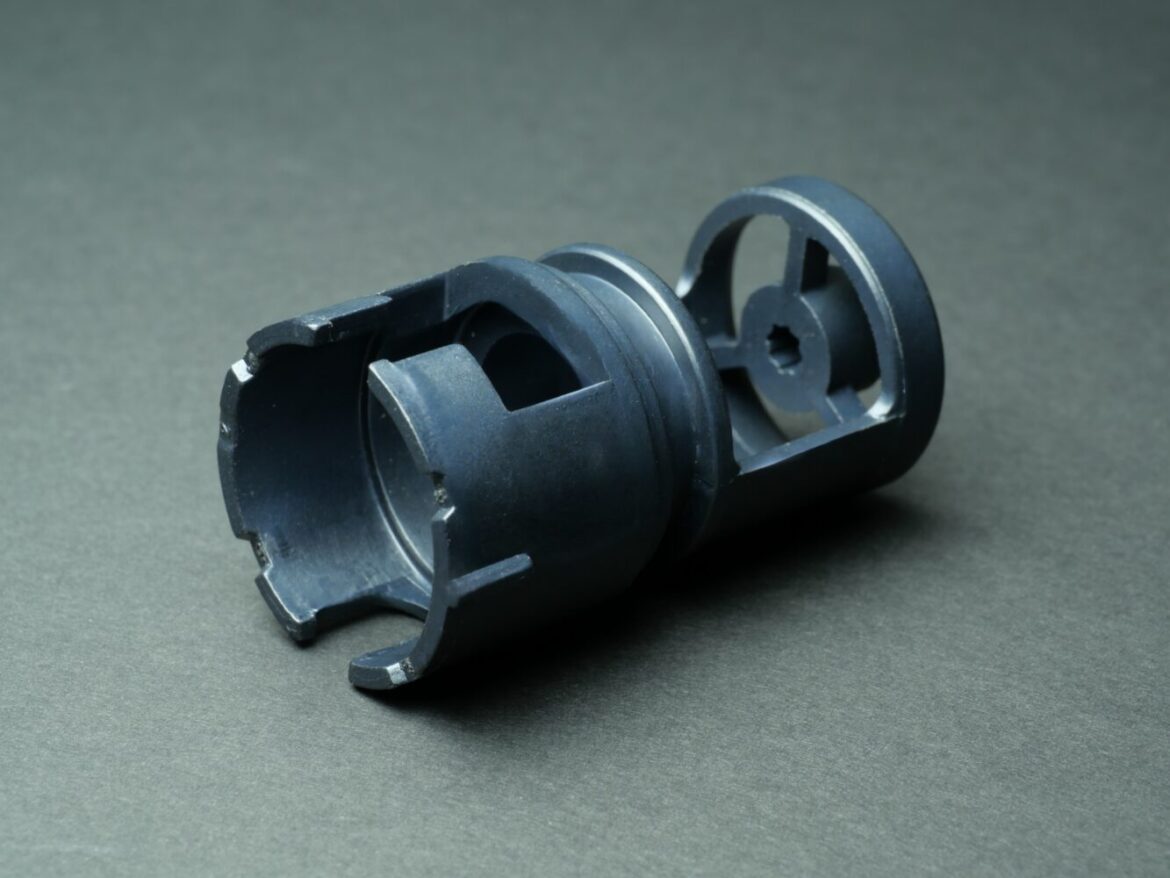
This is an injection molding case study of a residential equipment housing with an outer diameter of φ28.5 mm and a height of 16.5 mm.
This product exhibits significant material anisotropy and a geometry prone to dimensional variation, making it difficult to maintain dimensional tolerances under standard molding conditions. Therefore, by optimizing molding conditions and mold design, stable molding within the specified dimensional tolerance has been achieved.
In addition, during mass production, mold deposit (MD) tends to accumulate in gas vent areas, posing a risk of short shots caused by gas burn. As a countermeasure, regular mold cleaning and maintenance are carried out to suppress molding defects and maintain stable product quality.
OA equipment gear
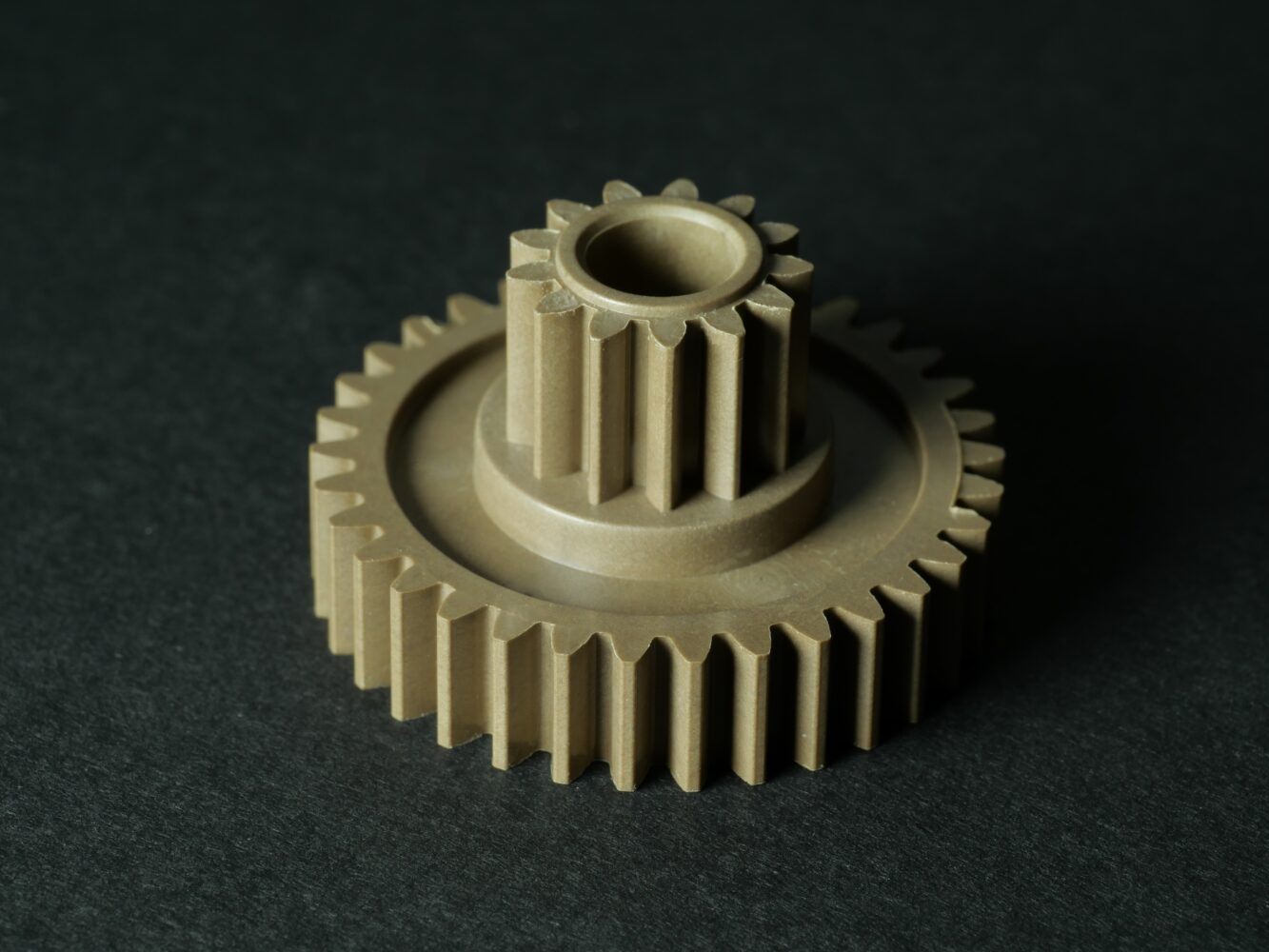
This is an injection molding case study of a gear for OA equipment, using a material composed of PPS resin + PTFE (fluoropolymer) + 50% mineral filler, with an outer diameter of φ28.8 mm and a height of 16.5 mm.
In this product, CAE analysis was utilized to study and determine the optimal gate location, thereby optimizing resin flow balance and achieving stable quality.
In addition, to maintain quality during mass production, regular mold maintenance is carried out to reduce the occurrence of non-conforming products and to keep the molding condition stable.
Our company has extensive experience in injection molding using PPS resin. If you have any issues with PPS molding, please feel free to contact us.
Trust us for high-quality PPS injection molding
How was it? In this topic, we introduced the characteristics of PPS and key points of injection molding. Juraron Industries Co., Ltd. has extensive experience in PPS molding and can handle a production volume of 500,000 units per month. Please feel free to contact us.
About JURARON Group
JURARON Group, with its headquarters in Japan, has expanded its branches in Vietnam, Hong Kong, and China. We specialize in the development, production, and sale of precision components,primarily made using injection molding technology. In addition, we provide optical design services, lens injection molding,and the production and processing of ultra-precision molds and components.
Please visit our website for more detailed information about our products and services.